Face-to-face field surveys are a fertile ground for innovation, far removed from the cliché of an interviewer armed only with paper and pencil. Digital tools can address many of the specific challenges of this type of research: enabling remote interviews, overcoming language barriers and accessibility issues, and ensuring confidentiality and data security. Here are four areas where innovation can deliver concrete solutions.
GIDE is mainly known for its expertise in online research, especially in the programming of web questionnaires (CAWI). That is indeed one of our core specialties, but not the only one.
For years, we have supported research institutes, academics, public organizations, ministries, and brands in the deployment of face-to-face fieldwork, whether for large-scale surveys or more targeted studies, often involving hard-to-reach populations.
We often describe ourselves as a “fieldwork facilitator”, in the sense that we use technology to help interviewers do their job under the best possible conditions.
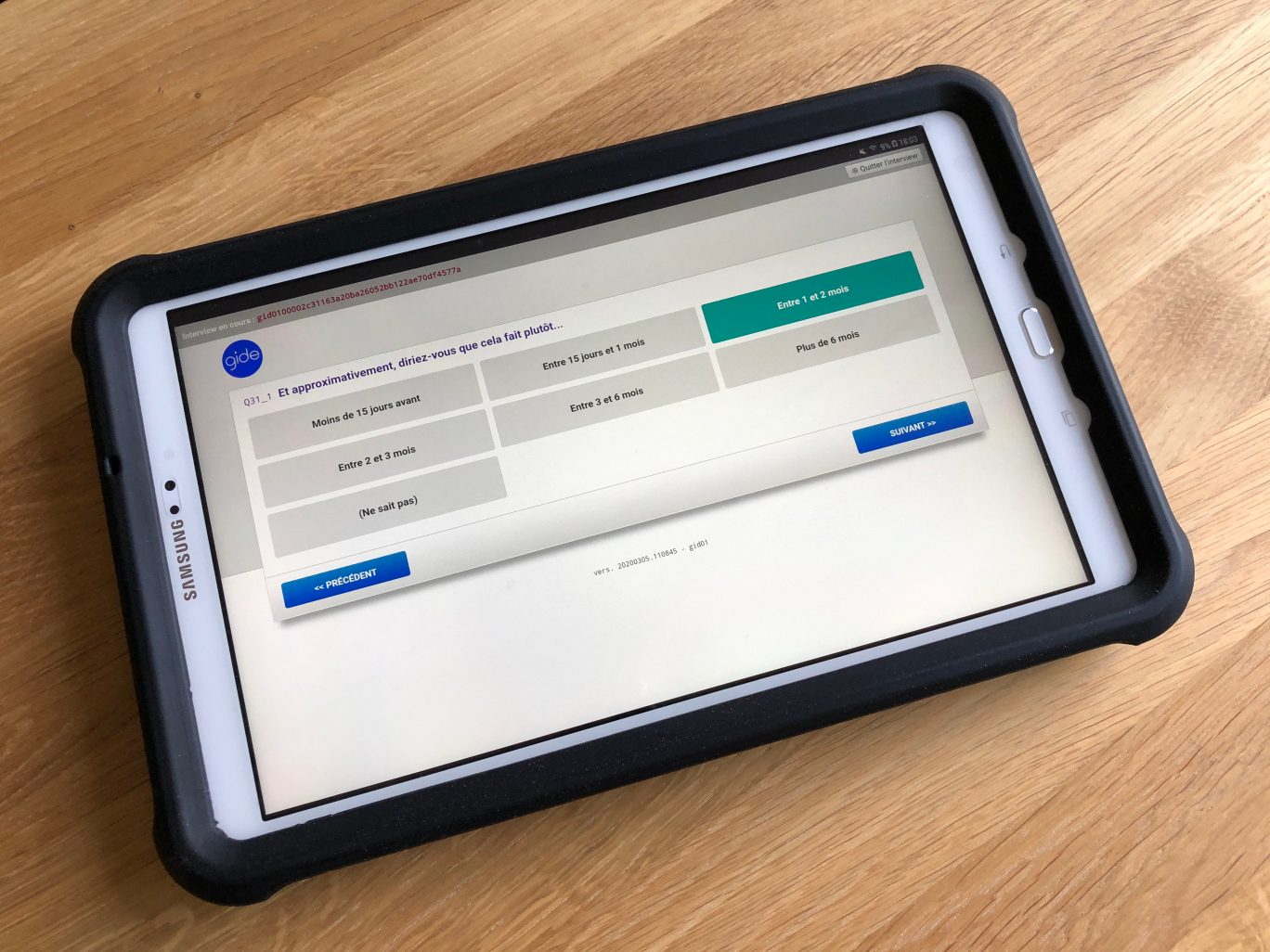
Face-to-face field surveys raise issues that are very different from those of self-administered online surveys. In the public imagination, face-to-face interviewers still go door to door with a notebook and paper forms. In reality, they now most often work with tablets, and since the Covid period they have also had to rethink how to conduct interviews remotely.
Below are a few common challenges encountered in face-to-face fieldwork, along with the solutions that can be used to address them:
- When face-to-face fieldwork becomes impossible
- Surveying multilingual and non-native-speaking populations
- Accessibility challenges for respondents with disabilities
- Confidentiality and sensitive data
1. When face-to-face fieldwork becomes impossible
This challenge became particularly visible during the pandemic, when it was often impossible for interviewers to travel and conduct in-person fieldwork. Yet research could not simply stop. In fact, new studies were needed to understand the situation itself: lockdown experiences, attitudes toward vaccination, and more.
To address this, we developed two solutions for our clients: EQD (“Electronic Questionnaire Device”) and CAVIsio.
Lending tablets to respondents: EQD (“Electronic Questionnaire Device”)
For some populations, completing an online questionnaire is simply not possible. At the same time, paper forms have well-known limitations: they can feel intimidating, they do not allow automated consistency checks, and they require time-consuming manual data entry afterwards.
One solution is to leave a tablet with the respondent so they can complete the questionnaire independently, even offline (with responses synchronized later by the interviewer). The tablet is then returned to the survey organization. It is also possible to imagine mailing the tablet to the respondent and having it returned by post, with a pre-printed return label.
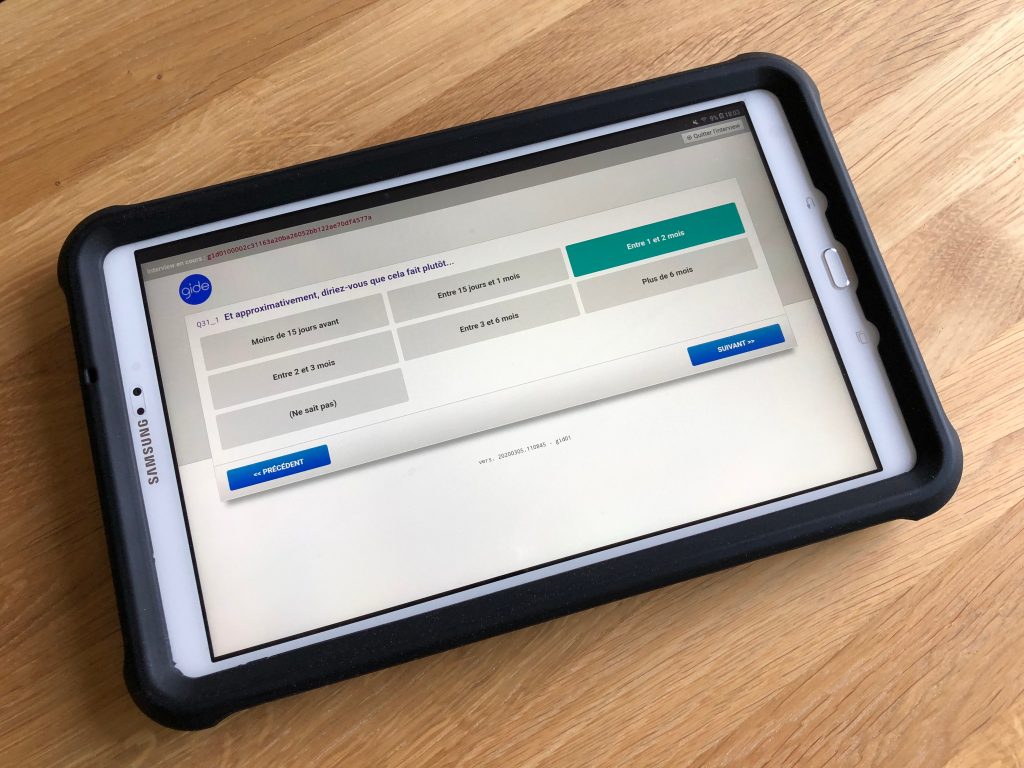
The tablets are configured so they can only be used to complete the questionnaire: the survey starts automatically when the tablet is turned on, and all other uses are blocked. If the tablet is handed over in person, the interviewer can explain how to use it, but the questionnaire is also designed to be as simple and intuitive as possible, with appropriate font sizes and optimized navigation. Voice responses to open-ended questions can also be enabled, with audio files optionally processed later using speech-to-text technologies.
Because the tablet is not connected to the internet, responses are stored locally on the device. To guarantee confidentiality in the event of loss, theft or hacking, all data is encrypted. More on this in section 4 below.
Once the interviewer retrieves the tablet, they can unlock an administrator mode, connect the device to the internet, upload the responses to our secure servers, and prepare it for the next interview by deleting the previous respondent’s data. And, of course, disinfect the tablet.
Our EQD solution is compatible with a wide range of tablets, and we also maintain a stock of ready-to-use devices that can be made available for research projects.
CAVIsio: video interviewing for face-to-face research
The second solution we offer uses video to recreate the conditions of face-to-face interviewing as closely as possible in a remote setting. It addresses very concrete challenges faced by interviewers. We call this solution CAVIsio (a combination of “CAVI”, for Computer Assisted Video Interviewing, and “visio”).
Where did the idea for CAVIsio come from?
During the first lockdown, face-to-face interviewers often had to conduct interviews by phone while running a questionnaire on their tablet or computer, without being able to show anything to the respondent and without visual contact.
Commercial videoconferencing tools were also tested. But they often created technical issues for respondents: software installation, complex settings, and a fragmented experience for interviewers who had to juggle multiple windows, one for video and one for the questionnaire.
We therefore designed CAVIsio, a solution that runs on computer, tablet or smartphone through a simple web browser. It brings together the interviewer’s video, the respondent’s video and the questionnaire in a single window. Since it requires no installation or special configuration, it is especially easy for respondents to use.
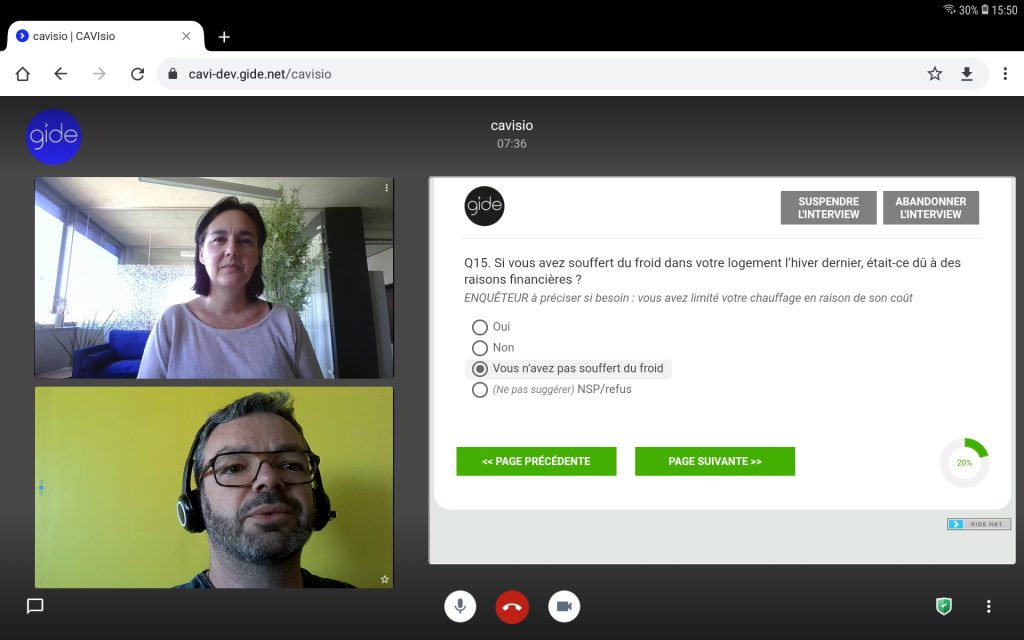
Secure and easy to deploy, CAVIsio is also customizable and scalable: we can add new features or adapt it to a client’s specific constraints or survey protocol.
>> To learn more, read our article about CAVIsio.
2. Surveying multilingual and non-native-speaking populations
One recurring challenge in face-to-face fieldwork is the language barrier when surveying respondents who do not speak the interviewer’s language. This was the case in a study we worked on for IRDES, on access to healthcare for undocumented migrants in France.
To enable interviewers to collect data directly in shelters, associations and support centers, Gide provided tablets that could function without internet access, following the same principle as EQD described above. The questionnaire was available in 14 languages, including multiple writing systems such as Arabic, Tamil, Bengali and Dari, all displayed directly on the tablet.
This meant interviewers no longer had to rely on paper translations of the questionnaire, and respondents could complete the survey more independently.
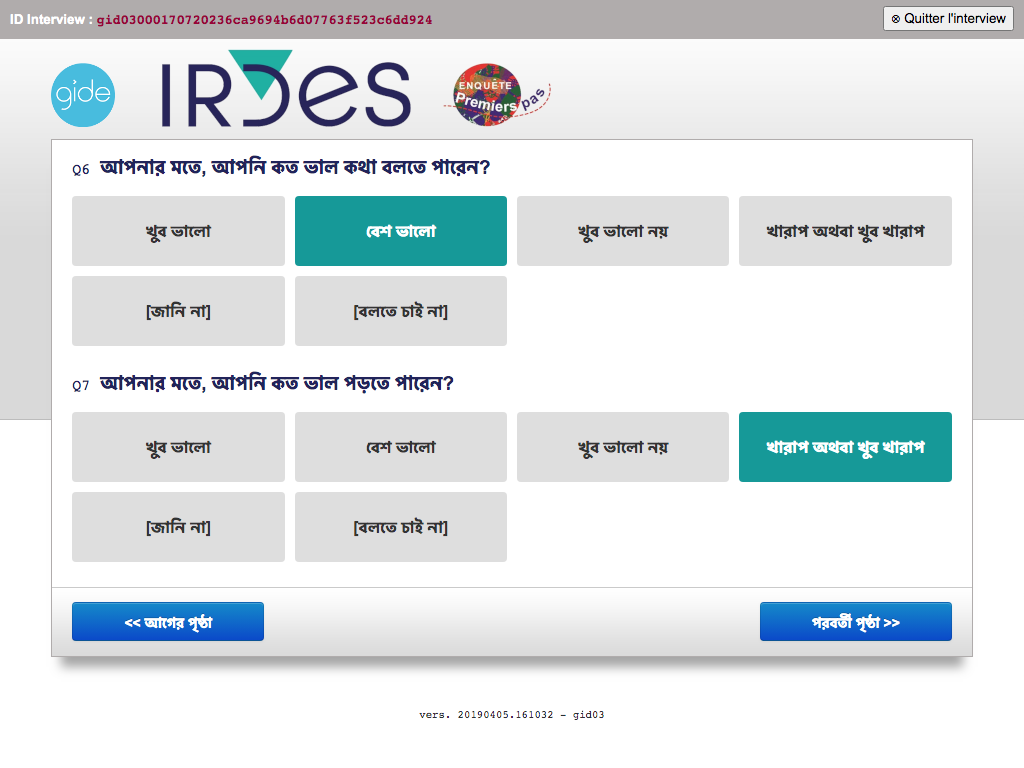
>> Read the full case study: IRDES: a multilingual questionnaire for migrant populations
When respondents also have reading difficulties, audio playback of the questions can be added as well.
3. Accessibility challenges for respondents with disabilities
At GIDE, we work with accessibility standards derived from the WCAG, which define the criteria digital services should meet to be usable by everyone, regardless of disability. This is a major issue not only for self-administered web surveys (CAWI), but also for interviewer-administered questionnaires in the field (CAPI).
For example, it may be necessary to provide video versions of questions in sign language for deaf and hard-of-hearing respondents. Reading written language can sometimes be challenging for people with hearing impairments, especially when sign language is their primary language.
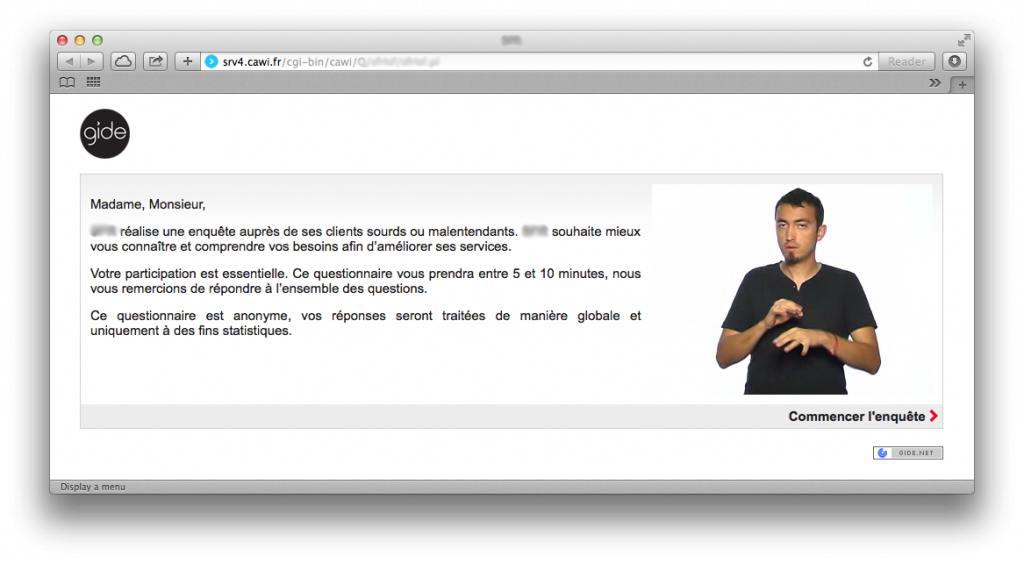
In other cases, the questionnaire must be compatible with screen readers for visually impaired respondents. A screen reader can convert questions and response options into Braille output or synthetic speech. This may be especially important when, for confidentiality reasons, the respondent needs to answer independently without the interviewer’s direct involvement.
To go further in the accessibility of both CAPI and CAWI questionnaires, we also implemented an accessibility-oriented design system within Scroll, our survey production framework. This provides a set of components and best practices designed to improve both accessibility and user experience for interviewers and respondents alike.
Also read: Disability and literacy barriers: 4 examples of accessible and inclusive surveys
4. Confidentiality and sensitive data
Some studies require enhanced confidentiality protocols.
Ideally, the interviewer, or anyone else present in the household, should leave the room so the respondent can answer privately on a computer or tablet. Responses should be fully anonymized, and the interviewer should not be able to link an answer to a specific respondent.
We recently encountered this in a large survey about exposure to sexist or sexual violence.
In that case, it was not possible for the interviewer to leave the room. We therefore implemented an original solution: respondents wore headphones through which the questions were read aloud. On the questionnaire itself, the response options were not shown in plain text but represented using color-coded zones.
This allowed respondents to answer honestly without anyone being able to read either the question asked, which was only delivered through audio, or the selected response, which was represented by colored touch areas.
This is essential when research deals with highly intimate situations or social taboos and the objective is to collect the most accurate possible data.
Of course, confidentiality also raises broader data security issues. Data must be anonymous and encrypted. If a tablet is lost or stolen, it must not be possible to recover responses in plain text.
To prevent this, we apply two layers of security:
- the tablet’s storage is encrypted and protected using the device’s native security features;
- the collected data itself is encrypted using enhanced encryption implemented directly in our CAPI questionnaire system, so that responses cannot be accessed even while the tablet is powered on.
In conclusion
These are only a few examples of how technology can help interviewers do their job more effectively in the field. The key takeaway is that a bespoke approach, combined with a detailed understanding of the survey’s constraints and objectives, makes it possible to implement solutions that are both effective and genuinely impactful.
That is what innovation means to us at Gide: using technology to solve complex fieldwork challenges in a simple and practical way.